
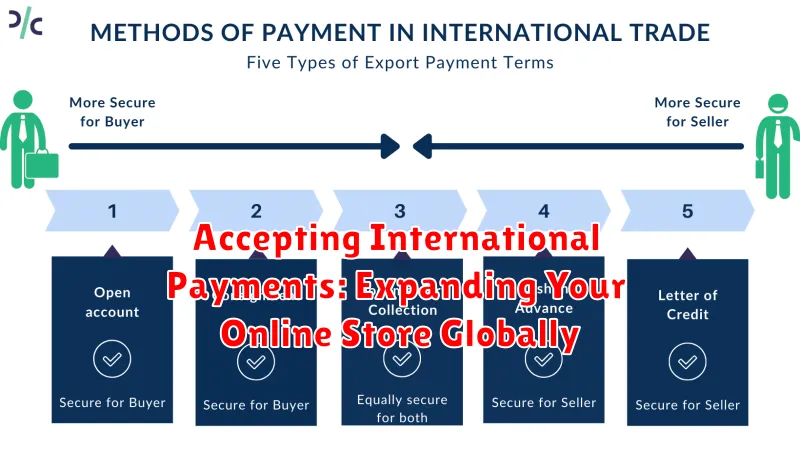
In today’s interconnected world, limiting your online store to domestic customers means missing out on a vast pool of potential revenue. Expanding globally can significantly boost your business growth, and a key factor in achieving this is the ability to accept international payments. This article will guide you through the essential steps and considerations for seamlessly integrating international payment gateways into your e-commerce platform, allowing you to tap into the lucrative global market and unlock new opportunities for your business. Learn how to navigate the complexities of cross-border transactions, currency conversion, and international payment processing, enabling you to broaden your customer base and increase your sales.
Accepting international payments is no longer a luxury but a necessity for e-commerce businesses looking to thrive. By offering a smooth and secure checkout experience for international customers, you can gain a competitive edge and unlock unprecedented growth potential. Discover the various payment methods favored by customers in different regions, understand the importance of fraud prevention for international transactions, and learn how to optimize your global payment strategy to minimize costs and maximize efficiency. This comprehensive guide will equip you with the knowledge and resources you need to confidently expand your online store globally and embrace the boundless possibilities of international commerce.
Understanding International Payment Methods
Expanding your business internationally requires understanding the diverse landscape of payment methods preferred by customers in different countries. Credit and debit cards, while widely accepted, may not be the dominant choice in all regions.
Digital wallets, such as PayPal, Alipay, and WeChat Pay, have gained significant traction globally, offering a convenient and secure alternative. These methods often allow customers to link their bank accounts or credit cards for seamless transactions.
Local payment methods are crucial for penetrating certain markets. These can include bank transfers, direct debits, or even cash-based systems specific to a region. Offering these familiar options can greatly improve conversion rates.
Prepaid cards offer another option, especially for customers without traditional banking access. Understanding these varying methods is essential for optimizing your payment strategy and reaching a wider international audience.
Choosing the Right Payment Gateway for International Transactions
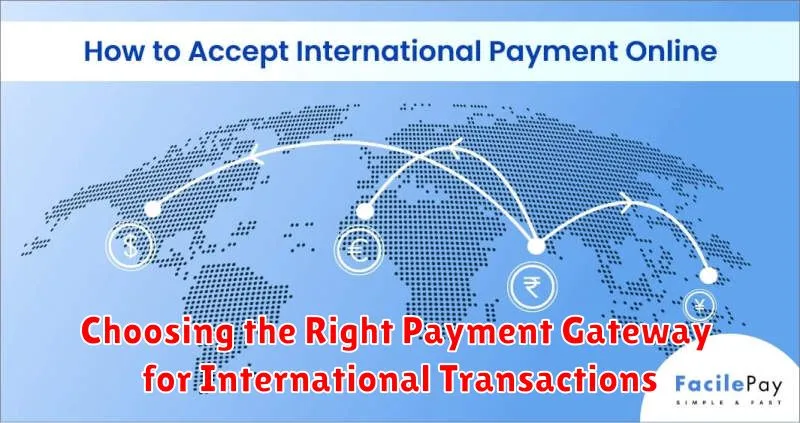
Selecting the right payment gateway is crucial for successful international commerce. A payment gateway acts as the intermediary between your online store and international customers, securely processing their payments.
Key factors to consider when choosing a gateway include:
- Supported Currencies: Ensure the gateway supports the currencies of your target markets. Offering transactions in a customer’s local currency significantly improves their shopping experience.
- International Payment Methods: Consider the preferred payment methods in your target regions. Beyond major credit cards, this may include digital wallets, bank transfers, or local payment schemes.
- Transaction Fees: Gateways charge varying fees per transaction. Analyze these fees and their impact on your profit margins.
- Security and Fraud Prevention: Robust security measures are paramount. Look for gateways with advanced fraud detection and prevention capabilities.
- Integration with Your Platform: Choose a gateway that seamlessly integrates with your existing e-commerce platform.
By carefully evaluating these factors, you can select a payment gateway that streamlines international transactions and fosters trust with your global customer base.
Setting Up International Payment Processing in Your Online Store
Integrating international payment processing into your online store involves several key steps. First, select your preferred payment gateway and create an account. Ensure the gateway supports the currencies and payment methods you intend to offer.
Next, integrate the payment gateway with your e-commerce platform. This typically involves installing a plugin or extension, or configuring an API connection. Thoroughly test the integration to confirm transactions are processed correctly.
Clearly display accepted payment methods and currencies on your website. This transparency builds customer trust. Provide clear instructions for international customers at checkout to minimize confusion and abandoned carts.
Finally, regularly monitor and optimize your international payment setup. Track conversion rates and identify any friction points in the checkout process. Stay informed about evolving payment regulations in your target markets.
Managing Currency Exchange Rates and Fees
Currency exchange rates fluctuate constantly, impacting your profit margins if not managed effectively. You need a strategy to handle these variations. Real-time exchange rates are often preferred for transparency, but consider the potential for price fluctuations impacting customer purchase decisions.
Fixed exchange rates offer stability but may require adjusting prices periodically to maintain profitability. Carefully analyze the pros and cons of each approach for your business.
Transaction fees also vary between payment gateways and processors. Be aware of these fees, which can include processing fees, cross-border fees, and currency conversion fees. Clearly understand the fee structure to accurately calculate your overall costs.
Transparency with your customers regarding exchange rates and fees is crucial. Clearly display the final price in their local currency before checkout to avoid confusion and potential cart abandonment.
Complying with International Payment Regulations
Navigating international payment regulations is crucial for businesses expanding globally. Compliance ensures smooth transactions, builds trust with customers, and avoids legal penalties. Different countries have unique regulatory frameworks governing online payments, so a thorough understanding is essential.
Key areas of focus include data privacy regulations, such as GDPR and CCPA. These regulations dictate how customer data is collected, stored, and used. Businesses must ensure their payment processes adhere to these stringent requirements.
Anti-money laundering (AML) and know your customer (KYC) regulations are also critical. These measures aim to prevent financial crimes by requiring businesses to verify customer identities and monitor transactions for suspicious activity. Failing to comply can result in significant fines and reputational damage.
Furthermore, businesses must understand and comply with tax regulations related to international transactions. This includes understanding VAT/GST requirements and reporting obligations in different jurisdictions.
Optimizing the Checkout Experience for International Customers
A seamless checkout is crucial for converting international shoppers. Minimize friction by offering multiple language options and clearly displaying prices in the customer’s local currency.
Address validation is key to reducing errors and failed deliveries. Implement a system that validates international addresses in real-time. Offering a variety of shipping options with transparent pricing also enhances the customer experience. Clearly communicate estimated delivery times and any applicable customs fees or taxes upfront.
Providing a range of payment methods is essential for catering to diverse international preferences. Consider popular options like international credit cards, digital wallets, and local payment solutions. Finally, ensure your website is mobile-friendly, as a significant portion of international shoppers use mobile devices for online purchases.
Handling International Payment Disputes and Chargebacks
Disputes and chargebacks are an inevitable part of accepting international payments. Understanding how to manage them effectively is crucial for protecting your revenue and maintaining positive customer relationships.
International disputes often arise from misunderstandings regarding currency conversions, shipping times, and product descriptions. Address these proactively by providing clear and accurate information on your website in multiple languages.
Chargebacks can be more complex due to varying regulations and consumer protection laws across different countries. Ensure you have robust documentation for each transaction, including proof of delivery and customer communication. This documentation will be essential when responding to chargeback claims.
Work closely with your payment processor to understand their dispute resolution process and the required documentation for each region. A streamlined process will enable you to respond promptly and effectively to disputes, minimizing losses and preserving customer trust.
Expanding Your Business Globally with International Payments

Expanding your business into international markets presents significant opportunities for growth and increased revenue. A key component of this expansion is the ability to accept international payments seamlessly. By offering diverse payment options, you cater to a wider customer base and foster trust in your brand.
Researching and understanding the preferred payment methods in your target markets is crucial. While credit cards are widely accepted, other methods like e-wallets, bank transfers, and even cash-based systems hold significant importance in specific regions. Offering these familiar options can significantly reduce cart abandonment and boost conversion rates.
Currency conversion is another important consideration. Displaying prices in the local currency of your target market enhances the customer experience and avoids confusion. Partnering with a payment gateway that handles currency conversion automatically simplifies this process for both you and your customers.
Successfully navigating international regulations related to taxes, data security, and fraud prevention is essential for sustained global growth. Ensure your payment systems comply with the legal requirements of each region you operate in to maintain trust and avoid potential penalties.
Best Practices for Accepting International Payments
Implementing international payments successfully requires careful consideration of several key factors. Clearly displaying accepted payment methods on your website is crucial for transparency and building customer trust. Offering a variety of payment options, including popular international credit cards, e-wallets, and local payment methods, caters to diverse customer preferences and increases conversion rates.
Currency conversion is another essential element. Providing transparent and accurate pricing in the customer’s local currency avoids confusion and fosters a positive shopping experience. Consider offering dynamic currency conversion at checkout to allow customers to pay in their own currency while you receive payment in your preferred currency.
Security should be a top priority. Implement robust fraud prevention measures to protect your business and your customers from fraudulent transactions. Ensure your payment gateway is PCI DSS compliant to maintain the highest level of security for sensitive payment information.
