
In today’s competitive digital landscape, a robust email campaign strategy is no longer optional, but essential for e-commerce success. Maximize your e-commerce sales by leveraging the power of targeted email marketing. This article will delve into actionable strategies to help you craft compelling email campaigns that convert browsers into buyers, cultivate lasting customer relationships, and ultimately, boost your bottom line. We’ll explore key aspects of effective email marketing, including segmentation, personalization, and automation, to empower you to drive sales and achieve sustainable growth.
Learn how to transform your email marketing from a passive tool into a powerful revenue generator. Discover best practices for crafting engaging subject lines, designing visually appealing email templates, and delivering personalized content that resonates with your target audience. From welcome emails to abandoned cart reminders and post-purchase follow-ups, we’ll cover the entire email marketing spectrum, providing you with the knowledge and tools you need to optimize your email campaign strategy for maximum impact and increase your e-commerce sales.
Building a Targeted Email List for Better Engagement
A targeted email list is the foundation of a successful email marketing campaign. It’s crucial to attract subscribers who are genuinely interested in your products or services. This targeted approach leads to higher engagement rates and ultimately, increased sales.
Effective strategies for building a targeted email list include offering valuable incentives such as exclusive discounts, free shipping, or access to gated content like ebooks or webinars. Clearly communicate the benefits of joining your list and what subscribers can expect to receive.
Optimize your signup forms for easy completion. Keep the fields minimal, requesting only essential information. Place signup forms strategically throughout your website, including the homepage, product pages, and at checkout.
Ensure compliance with data privacy regulations and provide clear opt-in and opt-out options. Building a targeted email list takes time and effort, but the rewards in terms of engagement and conversions are substantial.
Crafting Compelling Email Subject Lines that Grab Attention
Your email subject line is the first, and often only, impression you make on a potential customer. A compelling subject line can significantly impact your open rates and overall campaign success. A poorly crafted one, however, can land your email directly in the spam folder or simply be ignored.
Focus on creating subject lines that are concise, intriguing, and relevant to your target audience. Clearly communicate the value proposition within the email’s content. Avoid using excessive exclamation points or all caps, as these can trigger spam filters and appear unprofessional.
Personalization can also be effective. Using the recipient’s name or referencing their past purchases can increase engagement. Consider using action-oriented language to encourage immediate opens.
Testing different subject lines through A/B testing is crucial to determine what resonates best with your audience. Analyze the results and refine your approach based on the data.
Segmenting Your Audience for Personalized Messaging
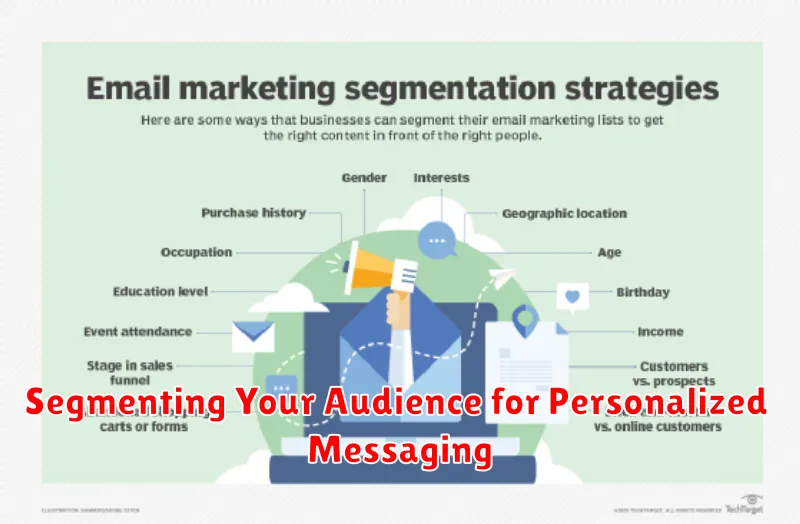
Segmentation is crucial for delivering relevant content that resonates with individual subscribers. By dividing your email list into smaller, more homogenous groups, you can tailor your messaging to specific needs and preferences, leading to higher engagement and conversions.
Consider segmenting your audience based on various factors:
- Demographics: Age, gender, location.
- Purchase history: Past purchases, frequency, average order value.
- Website activity: Products viewed, categories browsed, pages visited.
- Email engagement: Open rates, click-through rates, email preferences.
For example, you can send personalized product recommendations based on past purchases, or target specific demographics with tailored promotions. Segmentation enables you to send the right message to the right person at the right time, maximizing the impact of your email campaigns.
Designing Visually Appealing Emails for Increased Click-Through Rates
The visual appeal of your emails plays a crucial role in capturing your audience’s attention and encouraging them to click through to your website. A well-designed email is more likely to be read and acted upon.
Key elements of visually appealing email design include the use of high-quality images that are relevant to your products or promotions. Maintain a clean and organized layout, using whitespace effectively to avoid a cluttered appearance. Choose a professional color palette that aligns with your brand and is easy on the eyes. Ensure your email is mobile-friendly, as a significant portion of users will view your emails on their smartphones or tablets.
Consider incorporating visual hierarchy to guide the reader’s eye through the email. Use headings, subheadings, and bullet points to break up text and highlight important information. A clear call to action button, with a compelling design, is essential for driving conversions. Testing different designs through A/B testing can help you identify what resonates best with your audience.
Automating Your Email Campaigns for Efficiency and Consistency
Automation is key to scaling your email marketing efforts. By automating key processes, you can ensure consistent communication with your audience without requiring constant manual intervention. This frees up valuable time and resources, allowing you to focus on other critical aspects of your business.
Automated email workflows can be triggered by specific customer actions or timed events. For example, a welcome email series can be automatically sent to new subscribers, nurturing them towards their first purchase. Abandoned cart emails can remind customers of items left in their online shopping carts, recovering potentially lost sales.
Scheduled email campaigns, such as weekly newsletters or promotional announcements, ensure regular engagement with your audience. By pre-scheduling these campaigns, you maintain a consistent brand presence and keep your products or services top-of-mind.
Using an email marketing platform with automation features is crucial for streamlining these processes. These platforms allow you to create complex workflows, segment your audience, personalize emails, and track performance metrics, all automatically.
Leveraging Data and Analytics to Optimize Your Email Performance
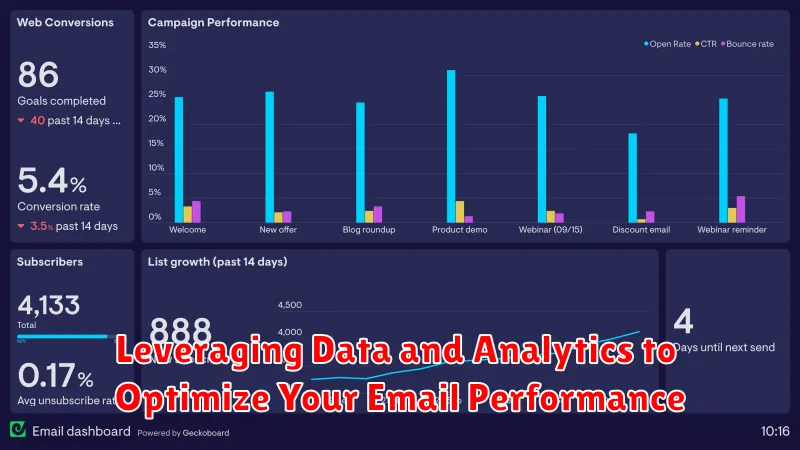
Data analysis is crucial for a successful email campaign. By understanding key metrics, you can refine your strategy and improve your return on investment. Tracking open rates reveals the effectiveness of your subject lines. Low open rates suggest the need for more compelling subject lines, perhaps incorporating personalization or A/B testing different options.
Click-through rates (CTR) indicate how engaging your email content is. A low CTR might signal a need to revise your calls to action, improve the clarity of your message, or optimize your email design for different devices. Analyzing bounce rates helps identify issues with your email list, such as invalid addresses, and maintain a healthy list hygiene.
Furthermore, tracking conversion rates directly measures the effectiveness of your email campaigns in driving sales or other desired actions. By analyzing this data, you can identify which elements of your emails contribute most to conversions and optimize accordingly. Finally, monitoring unsubscribe rates provides valuable feedback on your email frequency and relevance. A high unsubscribe rate suggests that you might be sending too many emails or that your content isn’t resonating with your audience.
A/B Testing Your Emails to Maximize Conversion Rates
A/B testing is a crucial element of any successful email marketing strategy. It allows you to compare two versions of an email to determine which performs better. By testing different elements, you can optimize your emails for maximum conversions.
Key elements to A/B test include subject lines, email copy, call-to-action buttons, and sending times. For example, you could test a shorter subject line against a longer one, or a button that says “Shop Now” versus “Learn More.” Even small changes can have a significant impact.
Analyze the results of your A/B tests to understand what resonates best with your audience. Use metrics like open rates, click-through rates, and conversion rates to determine the winning version. Implement the winning variation for your next email campaign and continue iterating through A/B testing to continuously improve your results.
Remember to only test one element at a time. Testing multiple elements simultaneously can make it difficult to determine which change impacted the results. This focused approach provides clear insights into what drives engagement and conversions.
Staying Compliant with Email Marketing Regulations
Maintaining a healthy email list and fostering positive relationships with your subscribers requires adhering to email marketing regulations. This not only protects your business from legal repercussions but also builds trust with your audience.
A key aspect of compliance is obtaining explicit consent before sending marketing emails. This often involves using a double opt-in process, where subscribers confirm their subscription via a confirmation email. Clearly presenting your privacy policy and providing an easy way to unsubscribe are also crucial.
Familiarize yourself with the CAN-SPAM Act in the United States and similar regulations in other regions you target. These laws outline specific requirements for commercial emails, including accurate sender information, a valid physical postal address, and clear subject lines that avoid misleading recipients.
Staying updated on these evolving regulations and incorporating best practices into your email marketing strategy will ensure sustainable and ethical communication with your subscribers.
