
Cart abandonment is a significant challenge for e-commerce businesses. It refers to the phenomenon where potential customers add items to their online shopping carts but leave the website before completing the purchase. Understanding the reasons behind cart abandonment is crucial for optimizing the checkout process and increasing sales. This article will delve into the various factors contributing to cart abandonment, exploring its impact on revenue and providing actionable strategies to combat it. From unexpected costs and complicated checkout processes to security concerns and lack of payment options, we’ll examine the key issues that drive customers away and offer solutions to recover lost sales.
Reducing cart abandonment is essential for maximizing your e-commerce business’s profitability. By addressing the underlying causes of cart abandonment, you can significantly improve your conversion rates and boost your bottom line. This article will equip you with the knowledge and tools to identify the cart abandonment issues specific to your business and implement effective solutions. We will explore various tactics, including optimizing website design for mobile devices, offering multiple payment options, providing transparent shipping costs, and implementing remarketing strategies to recapture lost customers and drive conversions. Learn how to turn abandoned carts into completed purchases and unlock the full potential of your online store.
What is Cart Abandonment?
Cart abandonment is an e-commerce specific term that refers to the action of a potential customer adding items to their online shopping cart, but leaving the website without completing the purchase.
This means they’ve progressed through the initial stages of the buying process, showing a clear intent to purchase, but ultimately decide not to finalize the transaction.
It’s important to distinguish cart abandonment from window shopping, where a customer may browse products without ever adding anything to their cart. Cart abandonment specifically implies the customer was close to converting, making it a crucial metric for businesses to track and analyze.
Why Do Customers Abandon Their Carts?
Several factors contribute to cart abandonment, ranging from simple browsing to more complex issues like website usability. Understanding these reasons is crucial for developing effective strategies to recover lost sales.
Unexpected Costs are a major deterrent. High shipping fees, taxes, or other unforeseen charges revealed at checkout often lead to abandoned carts. Customers prefer transparency throughout the purchasing process.
A Complicated Checkout Process can also discourage customers. Lengthy forms, mandatory account creation, or a lack of preferred payment options can frustrate shoppers and lead them to abandon their purchase.
Website Issues, such as slow loading times, security concerns, or a poor mobile experience, can also contribute to cart abandonment. A seamless and secure browsing experience is essential for retaining customers.
Simply Browsing or Window Shopping is another common reason. Some customers add items to their cart to save them for later or to compare prices across different sites, with no immediate intention to purchase.
The Impact of Cart Abandonment on Your Business
Cart abandonment directly impacts your bottom line, translating to lost revenue and diminished profitability. When a customer adds items to their cart but doesn’t complete the purchase, it represents a missed opportunity to convert a potential sale into actual profit.
Beyond the immediate loss of revenue, cart abandonment can also negatively affect your marketing ROI. If you’re investing in advertising to drive traffic to your site, but a significant portion of those visitors abandon their carts, your advertising spend becomes less efficient and impactful.
Furthermore, a high cart abandonment rate can indicate underlying issues within your sales funnel. It suggests potential usability problems, unclear pricing, or a lack of trust in your checkout process. These issues can hinder your overall business growth and damage your brand reputation.
Ultimately, cart abandonment creates a gap between potential and realized revenue, limiting your business’s ability to achieve its full growth potential.
Effective Strategies to Reduce Cart Abandonment
Several strategies can effectively combat cart abandonment and recover lost sales. Offering guest checkout options simplifies the purchase process for those hesitant to create an account. Clearly displaying shipping costs and delivery times upfront manages customer expectations and avoids surprises at checkout. A progress indicator within the checkout process provides transparency and motivates completion.
Multiple payment options cater to diverse customer preferences, increasing conversion rates. Implementing exit-intent popups with targeted offers can recapture wavering customers. A robust retargeting email campaign, reminding customers of abandoned items and offering incentives, is also crucial. These emails should be personalized and sent strategically over a short period.
Optimizing the mobile checkout experience is paramount in today’s mobile-first world. A streamlined, user-friendly mobile interface is essential for capturing on-the-go purchases. Finally, building trust and security through visible security badges and clear privacy policies reassures customers about sharing their information.
Calculating Your Cart Abandonment Rate
Understanding your cart abandonment rate is the first step towards reducing it. This crucial metric reveals the percentage of shoppers who add items to their online shopping cart but leave without completing the purchase.
The formula for calculating your cart abandonment rate is straightforward:
(1 - (Completed Transactions / Started Transactions)) * 100 = Cart Abandonment Rate
For example, if you had 100 initiated transactions (customers adding items to their cart) and 70 completed transactions, your calculation would be:
(1 - (70 / 100)) * 100 = 30%
This signifies a 30% cart abandonment rate. Regularly monitoring this metric, ideally on a weekly or monthly basis, allows you to identify trends and measure the effectiveness of implemented strategies to combat abandonment.
Analyzing Cart Abandonment Data
Analyzing cart abandonment data is crucial for understanding why customers abandon their purchases. This data provides valuable insights into areas for improvement within your online store.
Key metrics to track include:
- Cart abandonment rate: This is the percentage of initiated sales that are not completed.
- Average order value (AOV) of abandoned carts: This helps determine the potential revenue loss.
- Products most frequently abandoned: Identifying specific products can reveal issues with pricing, product descriptions, or availability.
- Point of abandonment: Tracking where in the checkout process customers abandon their carts helps pinpoint friction points, such as complicated forms or unexpected shipping costs.
By analyzing these metrics, you can identify trends and patterns that contribute to cart abandonment. For example, a high abandonment rate at the shipping stage may indicate that your shipping costs are too high or lacking clarity. Similarly, if certain products are consistently abandoned, you can investigate potential issues related to product presentation or pricing.
Using analytics platforms and data segmentation can further refine your understanding. Segmentation allows you to analyze cart abandonment data by different customer groups, like new vs. returning customers or customers from different geographical locations. This granular approach provides more specific insights and enables targeted recovery strategies.
Tools to Help Recover Abandoned Carts
Several tools can assist in recovering abandoned carts and boosting sales. These tools often integrate with existing e-commerce platforms and provide various functionalities to re-engage customers.
Email Marketing Platforms: These are crucial for sending automated abandoned cart email reminders. Look for platforms offering features like personalized messaging, dynamic content, and A/B testing capabilities to optimize email effectiveness.
Retargeting Ads: Platforms like Google Ads and social media advertising networks allow you to display targeted ads to users who have abandoned their carts. These ads serve as reminders and can offer incentives to complete the purchase.
On-site Pop-ups: Exit-intent pop-ups can capture a customer’s attention as they are about to leave your site. Offering a discount or highlighting free shipping can be persuasive in encouraging them to reconsider abandoning their cart.
Live Chat Software: Providing real-time support through live chat can address customer concerns and queries immediately, potentially resolving issues that led to cart abandonment.
Cart Abandonment Analytics: These tools provide insights into why customers are abandoning their carts, identifying potential pain points in the checkout process. This data is invaluable in optimizing the user experience and reducing future abandonment rates.
Examples of Successful Cart Abandonment Recovery
One common example of successful cart abandonment recovery involves a clothing retailer. They implemented an abandoned cart email series. The first email, sent one hour after abandonment, offered a gentle reminder and showcased the items left in the cart. The second email, sent 24 hours later, included free shipping as an incentive. This strategy saw a 15% recovery rate in abandoned carts.
Another example comes from a software company offering a subscription service. They used a combination of exit-intent popups and retargeting ads. The popup offered a limited-time discount if the user subscribed immediately. Retargeting ads displayed customer testimonials and highlighted the benefits of the software, leading to a 10% lift in conversions from abandoned carts.
Finally, a food delivery service successfully recovered abandoned carts by using push notifications. If a user abandoned their cart, they received a time-sensitive notification offering a small discount on their order. This, combined with visually appealing images of the food, helped them recover 8% of abandoned carts.
Best Practices for Cart Abandonment Emails
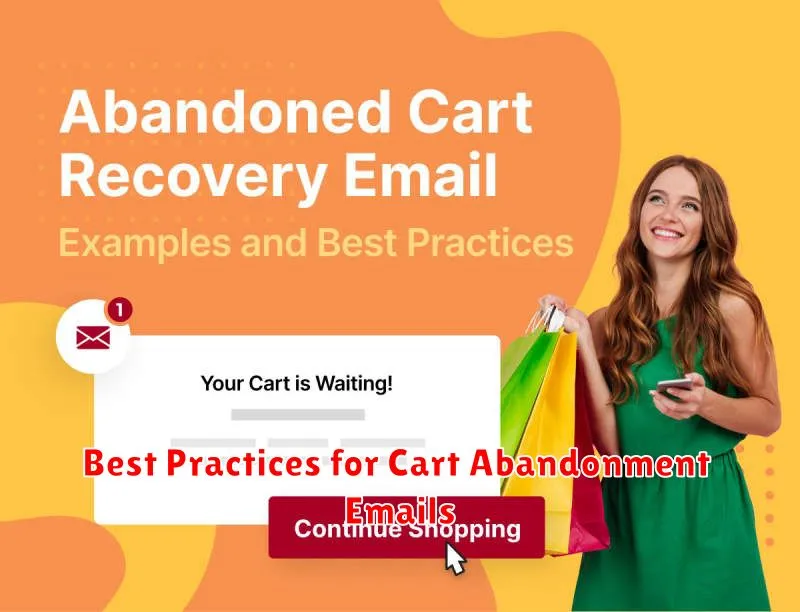
Crafting effective cart abandonment emails requires a strategic approach. Timing is crucial. Sending the first email within an hour of abandonment is often recommended.
Subject lines should be compelling and personalized. Use the customer’s name or mention the specific product left behind. Keep them concise and intriguing to encourage opens.
Email content should clearly display the abandoned items, including images and descriptions. Highlight any scarcity, such as low stock or limited-time offers. Include a prominent call to action, making it easy for customers to return to their cart.
Offering incentives like free shipping or discounts can significantly improve conversion rates. Provide clear and concise information about shipping costs and delivery times to alleviate potential concerns.
Testing different email variations (A/B testing) allows you to optimize subject lines, content, and incentives for maximum impact. Track your results and adjust your strategy based on data.
