
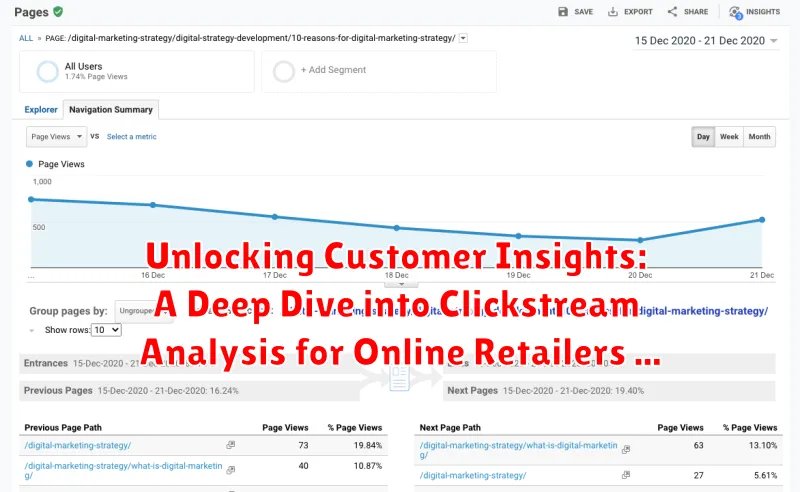
In today’s fiercely competitive online retail landscape, understanding customer behavior is paramount to success. Clickstream analysis offers a powerful tool for unlocking invaluable customer insights, providing a granular view of how users interact with your online store. By delving deep into clickstream data, online retailers can gain a competitive edge, optimizing their websites, personalizing the customer journey, and ultimately driving conversions and revenue growth. This article will provide a comprehensive exploration of clickstream analysis, outlining its benefits, methodologies, and practical applications for online retailers.
From initial website visits to final purchases, clickstream analysis captures the entire customer journey, offering a wealth of data on user behavior. By analyzing this data, retailers can identify trends in browsing patterns, product preferences, and purchasing decisions. Understanding these patterns allows businesses to tailor their marketing strategies, improve website navigation, and personalize product recommendations, all of which contribute to enhanced customer experience, increased customer engagement, and improved ROI. This deep dive into clickstream analysis will empower online retailers to leverage the power of customer insights and unlock significant growth opportunities.
Understanding the Power of Clickstream Data
Clickstream data provides a wealth of information about how customers interact with an online retail environment. It offers a granular view of their browsing behavior, revealing patterns and preferences that would otherwise remain hidden. By analyzing this data, retailers gain valuable insights into customer motivations, pain points, and decision-making processes.
This understanding empowers retailers to make data-driven decisions that enhance the customer experience. Imagine knowing which products customers view most often, the paths they take through your website, and where they abandon their shopping carts. Clickstream analysis reveals these crucial details, providing the foundation for strategic improvements.
The power of clickstream data lies in its ability to transform raw clicks into actionable intelligence. This allows businesses to optimize website design, personalize marketing campaigns, and ultimately, drive sales and customer loyalty.
Types of Clickstream Data and Their Applications in Retail
Clickstream data comes in various forms, each offering unique insights into customer behavior. Understanding these types is crucial for effective analysis.
Common Clickstream Data Types:
- Click Data: This fundamental data captures what items customers click on, revealing product interest and browsing patterns.
- Impression Data: Records which products are displayed to the customer, regardless of interaction. This helps analyze product visibility and placement effectiveness.
- Transaction Data: Tracks purchases, including items bought, quantities, and payment methods, essential for understanding conversion rates and sales performance.
- Navigation Data: Follows the customer’s path through the website, showing page sequences and navigation preferences. This informs website usability and information architecture analysis.
- Search Data: Captures keyword searches performed on-site, uncovering specific product interests and potential gaps in product offerings.
Retailers can leverage this data to personalize recommendations, optimize website layouts, and improve marketing campaign targeting.
How Clickstream Analysis Improves the Customer Journey
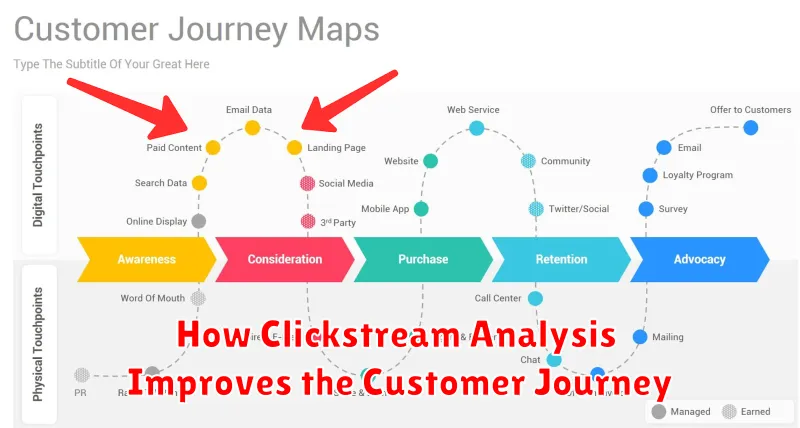
Clickstream analysis provides valuable insights into customer behavior, allowing online retailers to optimize the customer journey at every touchpoint. By understanding how customers navigate a website, retailers can identify pain points and areas for improvement.
Enhanced Website Navigation: Analyzing click paths reveals how users interact with the website’s structure. This data can inform website redesigns, improving navigation and making it easier for customers to find what they need. Streamlined navigation leads to increased conversion rates and reduced bounce rates.
Personalized Product Recommendations: Clickstream data helps identify customer preferences and purchase patterns. This information enables retailers to offer personalized product recommendations, increasing cross-selling and upselling opportunities. Tailored recommendations create a more relevant and engaging shopping experience.
Targeted Marketing Campaigns: By understanding customer segments based on their browsing history, retailers can create highly targeted marketing campaigns. This ensures that marketing messages resonate with the intended audience, maximizing campaign effectiveness and return on investment.
Implementing Clickstream Analysis: Tools and Techniques
Implementing effective clickstream analysis requires leveraging the right tools and techniques. Choosing the appropriate tools depends largely on the volume and complexity of data collected.
Web Analytics Platforms like Google Analytics and Adobe Analytics provide basic clickstream data collection and reporting features. They are often a good starting point for businesses new to clickstream analysis, offering insights into page views, traffic sources, and user demographics.
For more advanced analysis, specialized clickstream analysis tools are available. These tools often include features such as session replay, heatmaps, and cohort analysis, enabling deeper understanding of user behavior. Some platforms offer machine learning capabilities for predictive analytics, allowing businesses to anticipate future customer actions.
Data Management is crucial. Consider using a data warehouse or data lake to store and manage large volumes of clickstream data efficiently. ETL (Extract, Transform, Load) processes are essential for preparing data for analysis, ensuring data quality and consistency.
Lastly, data visualization tools are invaluable for communicating insights effectively. Creating clear and concise dashboards and reports helps stakeholders understand complex data and make data-driven decisions.
Best Practices for Effective Clickstream Analysis
To maximize the value of clickstream data, retailers should adhere to certain best practices. Data quality is paramount. Ensure data is accurately collected, cleaned, and validated to avoid skewed insights.
Segmentation is crucial for personalized analysis. Divide customers into meaningful groups based on demographics, browsing behavior, or purchase history to gain targeted insights.
Privacy must be a top priority. Comply with all relevant data privacy regulations and be transparent with customers about how their data is being used.
Finally, continuous monitoring and iteration are essential. Regularly review the effectiveness of your clickstream analysis strategy and adjust as needed to stay ahead of evolving customer behavior and market trends.
Addressing Privacy Concerns with Clickstream Data
Clickstream analysis offers invaluable insights, but it’s crucial to address the inherent privacy concerns. Data anonymization is a key technique, masking personally identifiable information (PII) like names and addresses while preserving the behavioral data for analysis.
Transparency with customers about data collection practices is paramount. Clear and accessible privacy policies, coupled with opt-out mechanisms, empower users to control their data. Data minimization is another crucial aspect, collecting only the necessary data for the intended analysis, limiting the potential risk of exposure.
Furthermore, adhering to data privacy regulations such as GDPR and CCPA is not merely a legal obligation, but a demonstration of commitment to customer trust. Secure data storage and processing practices are essential to prevent unauthorized access and breaches.
Measuring the ROI of Clickstream Analysis
Demonstrating the return on investment (ROI) of clickstream analysis is crucial for justifying its continued use and expansion. Key Performance Indicators (KPIs) tied directly to business objectives offer quantifiable measures of success.
One primary metric is conversion rate. By analyzing user behavior, online retailers can identify bottlenecks in the purchase funnel and optimize the user experience to drive higher conversions. This translates directly into increased revenue.
Average order value (AOV) is another important KPI. Clickstream data can reveal product affinities and suggest personalized recommendations, leading to customers adding more items to their carts and boosting AOV.
Furthermore, analyzing customer lifetime value (CLTV) through clickstream data reveals high-value customers and allows for targeted retention strategies. By understanding user preferences and purchase patterns, retailers can tailor marketing efforts and improve customer loyalty, maximizing CLTV.
Finally, reduced marketing costs can be achieved by optimizing campaigns based on clickstream insights. By understanding which channels and campaigns drive the most valuable traffic, businesses can allocate their marketing budget more effectively.
Future Trends in Clickstream Analysis for E-commerce
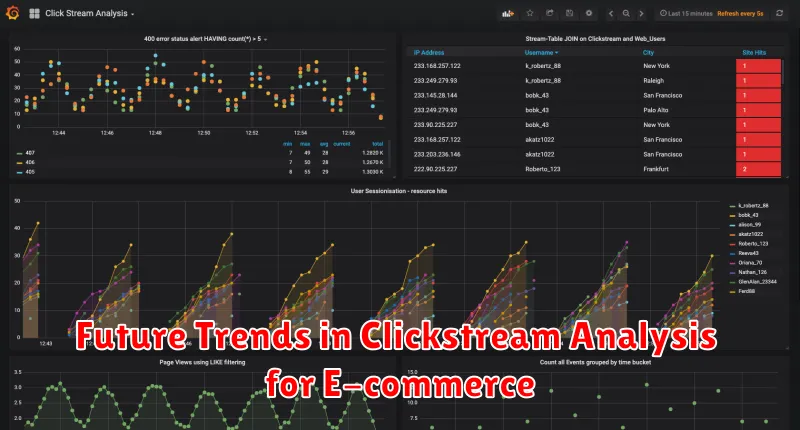
The future of clickstream analysis in e-commerce promises even more granular insights and predictive capabilities. Advancements in artificial intelligence (AI) and machine learning (ML) will play a pivotal role.
Real-time analysis will become increasingly sophisticated, allowing businesses to react instantly to customer behavior. Imagine personalized recommendations popping up as a customer browses, or dynamic pricing adjusting based on real-time demand.
Predictive analytics will move beyond simple product recommendations to anticipate customer needs and potential churn. This will enable proactive interventions, such as targeted promotions or personalized customer service outreach.
The integration of clickstream data with other data sources, such as social media activity and customer relationship management (CRM) data, will create a more holistic view of the customer journey. This unified view will unlock deeper insights and enable more effective personalization strategies.
